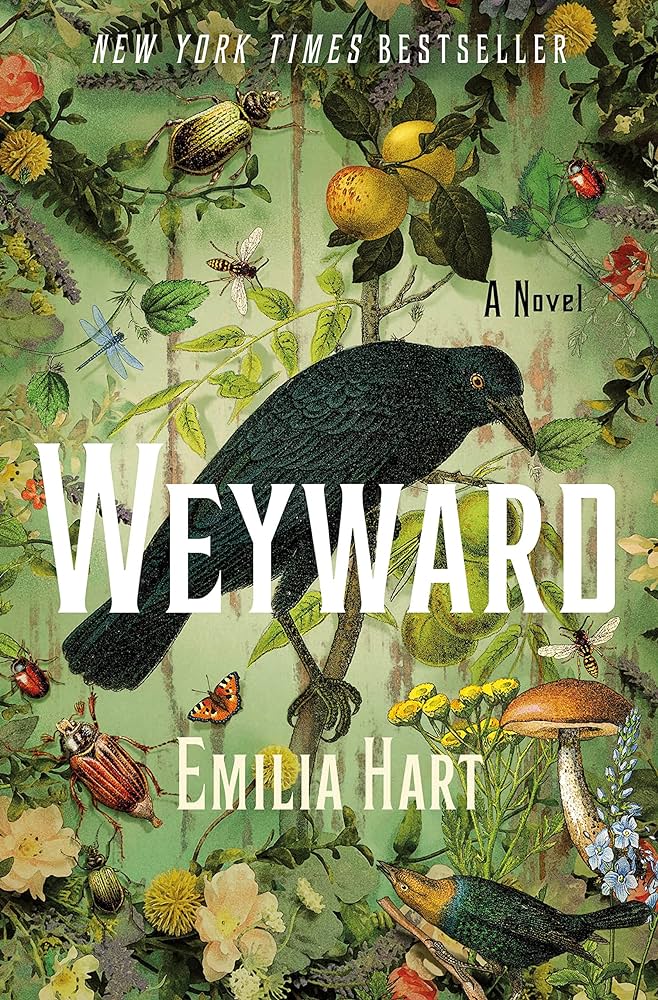
Weyward was my introduction to Emilia Hart, as well as the beginnings of a beautiful friendship with a colleague of mine. Around the time when I had thought I would never read or write again with the same passion as I had as a teenager, I was invited to join a book club at my school by a fellow English teacher whom I originally thought I had nothing in common with. If this isn’t the greatest lesson in not judging a book by its cover, then I don’t know what is.
Weyward is a story of female survival in a world dominated by relentless misunderstandings, accusations of witchcraft, and the consequences of losing oneself when patriarchal dominance removes one’s agency. It isn’t quite a secret that women who were different—I think the appropriate phrase is women whojust wanted to be themselves—faced all manners of persecution including death when they refused or simply were unable to navigate society at large. Weyward shows such dynamics through the interconnected stories of three generations of women with subtle weyward gifs.
If you’re cautious about dabbling in the occult, this is definitely a sanitized read. It gets moderately dark and there is a touch of suspense when danger rears its ugly head with each protagonist. I did, however, wish there were more interactions with the antagonists; they did not seem to be entirely fleshed out, appearing somewhat “evil for the sake of being evil.” I would have appreciated more interactions between them and the protagonists to intensify the plot’s friction.
Otherwise, it is still quite an enjoyable read, and I appreciated the subtleness of the magic. It aligns more with everyday folk magic as opposed to complex magical systems with mages and wizards.
When I was in high school, our art teacher wanted us to come up with a mural to hang in the school cafeteria. It was a design project, and we had to show and discuss the steps we took to create the mural. I was getting into political and philosophical ideas at the time, often listening to music that was heavy in social and political awareness. I would be lying if I said I was particularly knowledgeable and understood entirely what I was consuming, but one has to begin somewhere, right?
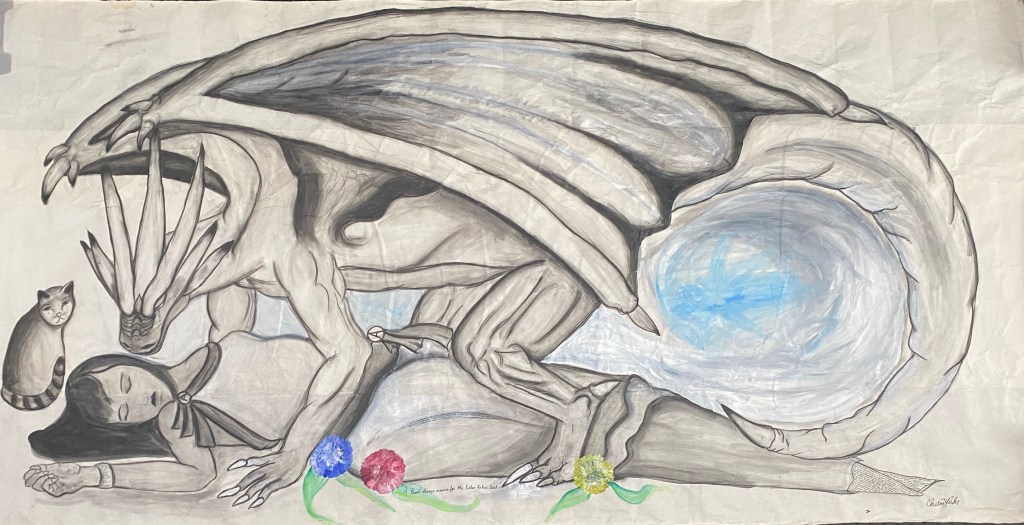
The Girl and the Dragon (somewhere around 2004-2005)
I was the lucky art student that had to hang their work first. So, my friend and crush at the time helped me hang the mural early before school started. What came next, I did not expect.
“It’s a dragon raping a girl!” a kid screamed.
That was not what I drew, nor was that even going through my head.
It was a Catholic school, so I pretty much created an uproar. I got my art teacher in trouble and I was brought down from class and back into the cafeteria to explain to the school what I had created.
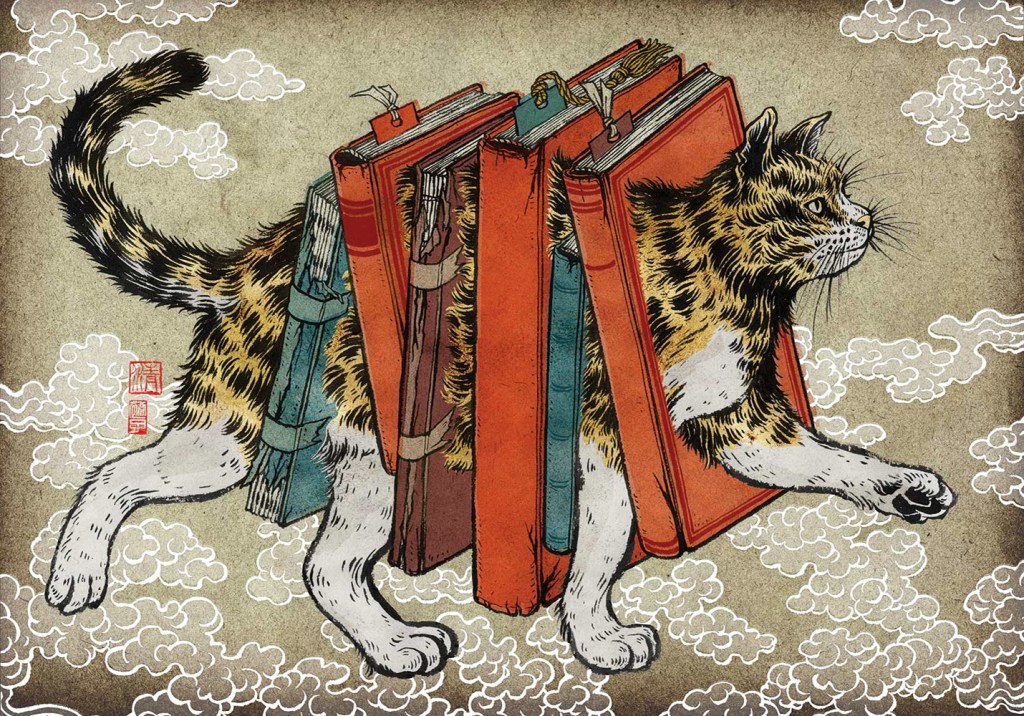
Rather than feeling fear or retribution, however, I was proud that something I made had begun a conversation. I had drawn a dragon crying and mourning the death of a human friend. She was killed by her own people because she had dared to love a sentient, living being beyond her own skin. It was a representation of how prejudice begats death and destruction. The cat peers at its audience, pleading why?
After high school, the desire to make those conversations disappeared.
The Beginning of Creative Cowardice
I used to love shocking people and getting them to think about real world issues: human rights, prejudiced thinking, environmental destruction, etcetera. In my young adulthood, however, I began to wonder what people would think about me and my ideas? Would my ideas, my art, and me be cancelled, my career snuffed out as soon as it started?
Social media, algorithms, and search engine optimization homogenized art. It all became fabricated content to appease the marketplace. I began to write blogs, killing my creativity and joy so that the Search Engine OptimizationGods would notice me and bless me with likes and eyes.
The result was work I did not even enjoy. Work that felt soul-less. Work that was identical to others because the aesthetic being pushed was safe and marketable. I did not even know who I was anymore.
The End of Creative Cowardice
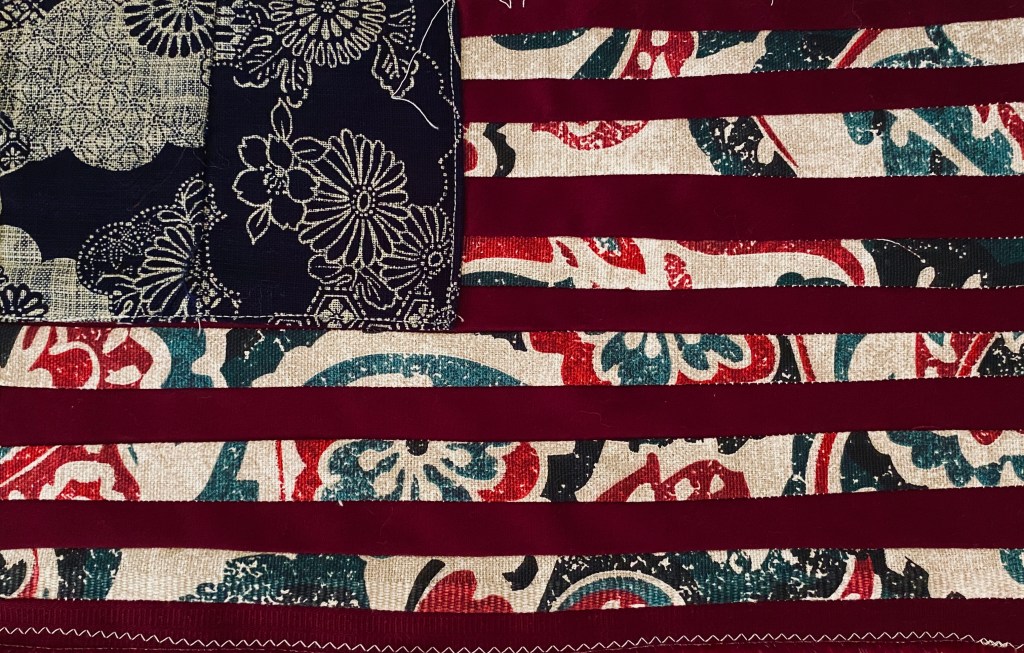
I created a small quilted American Flag for No Kings Day.
This morning, I remembered that mixed media picture I created for high school art. I have forgotten the title of it, but let’s call it The Girl and the Dragon. I rolled it out onto the garage floor and laughed at how beautifully naive it was, yet proud that my young sophomore self had more guts than I do now.
These days, I feel my younger self being summoned, having a story to tell, loving to create raw art from the inside out. I feel more empowered to release the creative cowardice that has kept me from creating anything. I want to create a work of enduring love, philosophy, and power. Even if I’m unsuccessful, I can say that I’ve tried.
A Story in Progress
My new hobby is writing unapologetically. I believe my book Eclipse (a steady work in progress), has been a good starting point. I want to talk about Diseases of the Mind. Since my goal is to put contemporary issues into a fantasy story, I wonder how I can express three issues that haunt me daily:
The inability to think for oneself.
Outsourcing thinking to others, especially machines.
Blatant refusal to attempt to think for oneself.
How can I fit these issues into the seemingly impossible moments my characters will have to overcome? Am I able to overcome them in real life? One who thinks for themselves has no room for creative cowardice.
Daily writing prompt
Share a hobby you’ve picked up recently — what got you into it?
I finished my fist novel when I was sixteen. I got it copyrighted and remember the excitement when my certificate arrived in the mail. I once thought to query it, but I never did. Perhaps I thought it wasn’t good enough. Perhaps more work needed to be done. Twenty years later, and I never finished another story since then—a painful realization as I let the struggles of the economy, work, and daily life overtake my initial dream of being a published writer. A dream differed.
Instead, I blogged, started a slew of unfinished novels, and let my creativity rot under an ocean of distractions.
After my students’ creative writing reignited my spark, I began the slow process of remembering what it was like to love scratching words in a notebook. Rusty yet working, the love for storytelling returned. I decided to begin rewriting that childhood novel with a more experienced voice.
Premise
I am letting go of the perfectionist pantsing pattern I used to abide by. It clearly doesn’t work for me because I have over twenty years of empty output. The definition of insanity is trying the same thing over and over again and expecting a different outcome, right?
This original story I’m working on was inspired by a jade bracelet I had in history class in 7th or 8th grade. While spacing out, I pretended it was a crown, and developed this idea about magical princesses. I created a story influenced by my favorite fantasy books and video games, featuring four young people on a journey to save the world—completely original, I know!
This time, I’m rewriting the same characters’ in a much darker world. And instead of the usual story of evil kings, sorcerers, and Lord of the Rings tropes, I decided to shoot for something different: a world of dark representative governments and capitalists instead—something that parallels with our present, but still has the flare of fantasy.
What if I take the insanity of America’s 2016 and 2024 elections, and essentially “Fuck Around and Find Out” by going all madwoman and writing a fantasy story centered around the injustices and anti-intellectualism of my world?
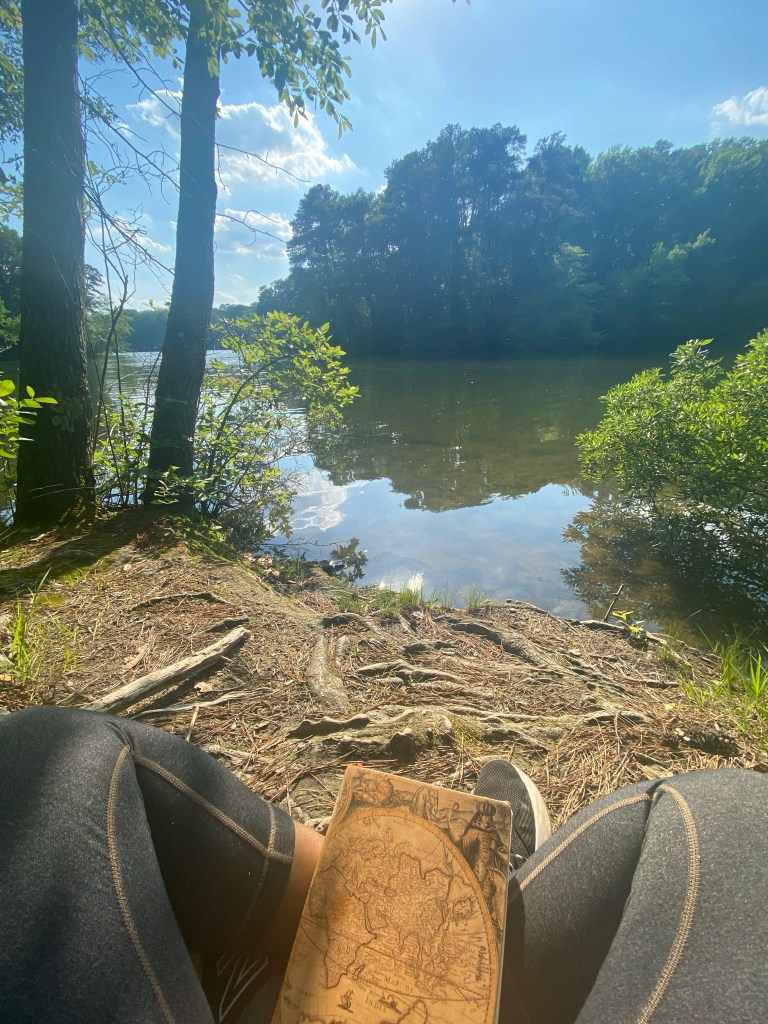
The words began spilling out of me since April 2026. Leather bound notebook in tow, I’ve been writing religiously for five months. I spend most of the writing time outdoors where I can write without distraction. The only music is the rustle of trees, laughing insects, singing birds, and sighing creeks. I write in wildlife reserves, public parks, national forests, and public libraries.
The story is fleshing out, whether beneath stormy skies or cruel heatwaves. I have so much to say, and I’m taking the craft of storytelling seriously this time by studying the art and science of plot, psychology, characterization, and voice. I still feel like I have no idea what I’m doing, but I feel comfortable in this new writing pattern. I’m getting somewhere and am unafraid of the outcome of this story.
Creating What I Want to Read
I am writing the sort of story I wish I could read. There are plenty of stories I adore—and am welcome to suggestions because there are millions of unique stories out there—but I want to see a story where there are twists to tropes, diverse characters and experiences, and worlds that mirror our planet earth, yet also feel different and refreshing.
AI-Free Writing
I am proud to say that this is a human-made endeavor. I am not generating any writing ideas with generative AI, nor is this book being made with AI. The only thing I cannot escape are search engines that use AI overviews—but I am steadfast in following up on research verified through books and articles. In fact, I began this blog to prove my humanness so that my stories have a paper trail or digital footprint. My stories won’t appear out of thin air under an unknown name.
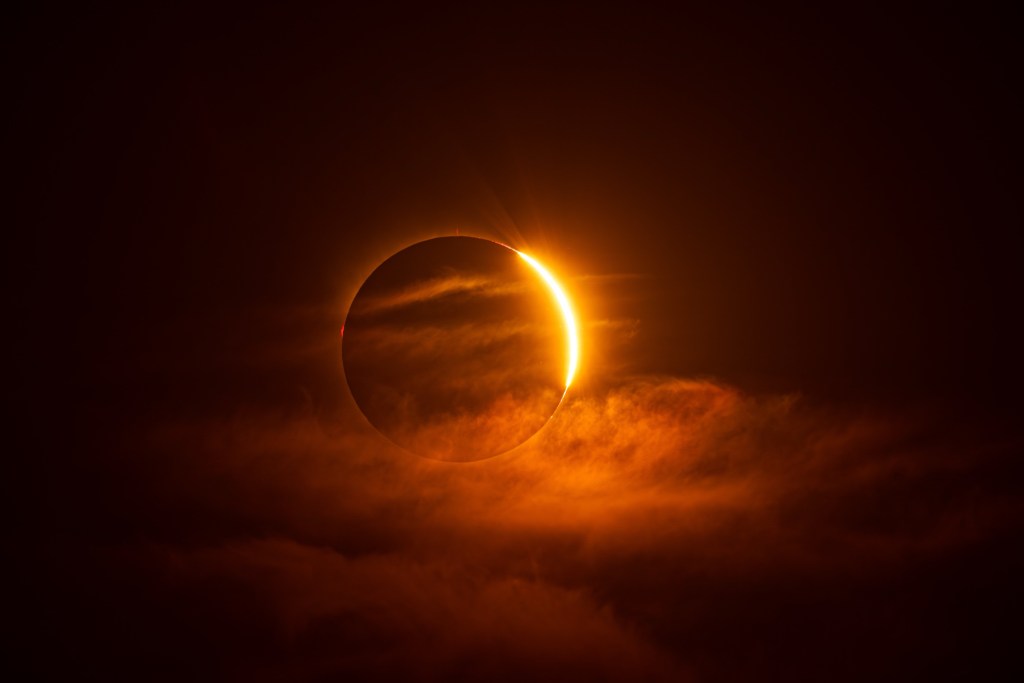
Let’s see together how far this story will go. I haven’t settled on a title yet, but for now let’s call my book Eclipse.
Daily writing prompt
What’s a book you never finished but still think about?
With school starting soon, teachers and instructors have to return to the headquarters for rounds of professional development. One of my friends and I attended a particular training on reading testing and diagnostics where we had to learn how to navigate an application that tested and recorded the Words Per Minute that a person could read. For kicks and giggles, we both took the test. I laughed because I wasn’t exactly surprised at my score, but my friend was incredibly shocked.
While she scored at over 300 words read per minute with both fiction and non-fiction, I laughed at my measly 175 to 200 words per minute, putting me at the low end for an adult. We read books together, enjoy book clubs, and she’s been my second pair of eyes for my current novel—which I’m excited that she has been enjoying. Yet, in no way do I view this slowness of reading as a terrible problem—except for it being a challenge when trying to read more books. Is it a conspiracy that words-per-minute is a strong measure for diagnosing reading ability? I’m jesting just a little, but sometimes it’s fascinating that the same reading challenges I faced as a child sometimes pop up in adulthood.
As someone who teachers Language Arts and Literature—and hopes to someday see her own book on the shelves of libraries—it often surprises others and especially my students when I tell them I am a slow reader. I insist it, especially when talking to children and adults who struggle to read content appropriate for their age group. Reading slowly can be wrought with uncertainty and feelings of inadequacy, especially when we observe people who fly through over a hundred books annually. There is, however, a perk to being a slow reader: being able to fully digest a book in its entirety from the words to the message to the imagery and metaphorical messaging. It does not necessarily mean that one does not or cannot comprehend what is being said on paper.
As of right now, I have read twenty-one books since February of 2026. For the average American, this may be a lot. However, there are loads of people who get through this amount in a few weeks. Twenty-one books is also the most books I have ever read in the same year. I used to typically read between two and five books a year—which is probably not ideal for an aspiring author. However, as I’ve begun to quicken my pace, I learned that reading for me is a sensory experience where all of the events and dialogue (even in non-fiction) become a theatrical production in my mind. I see fully fleshed out images, and I toy with the ideas presented in the books that I read. If the imagery is lacking, my mind creates it, filling up holes where there is otherwise sandy clouds and fog—I actually imagine fog as I read if I don’t fill in the visual blanks.
In the past, I was ashamed of how slowly I got through books, thinking that the number of books read is what counted. However, having a strong sensory experience to books is something I’ve only recently begun to appreciate. It feels like exercising the imagination. I am engulfed in the descriptions and stories, and my understanding with the words is fleshed out, like I am meeting a complete person. I have trouble skimming, my mind forgetting what I’ve skimmed, like glimpsing a forgettable portrait.
Thus, there is no need to fret about reading slowly, whether it is more stimulating to do so, or it is a natural reading pattern. So long as the book is enjoyable and thought-provoking, is there truly a disadvantage to a lack of speed?
Daily writing prompt
What’s a conspiracy theory you actually find believable?






 Galls & Walnuts