I have a soft spot for Japanese culture—surprisingly to most it did not begin with anime.
It all started in elementary school where I attended a Quaker academy for primary school. We had a teacher named Yuki who taught us Japanese, shared folk traditions, and occasionally treated us with rice candy. We often sang a song called Teru Teru Bozu, a nursery rhyme about a little ghost-like charm hung outside of windows to encourage sunny weather. We made our own teru teru bozu, and I hung mine on the window of our Brooklyn apartment until he got too dusty and crinkly.
Since then, I’ve dabbled a little bit in the language (I am far, far, far from fluent), cultural documentaries, practiced martial arts for over fifteen years, and incorporated homemade teriyaki, miso soup, onigiri, karē raisu, and other goodies into our diet at home. Until I can save up the money to actually go one day, I have been pretty obsessed with reading translated media (because, again, I’m not fluent), which has led me to a Japanese book haul one day.
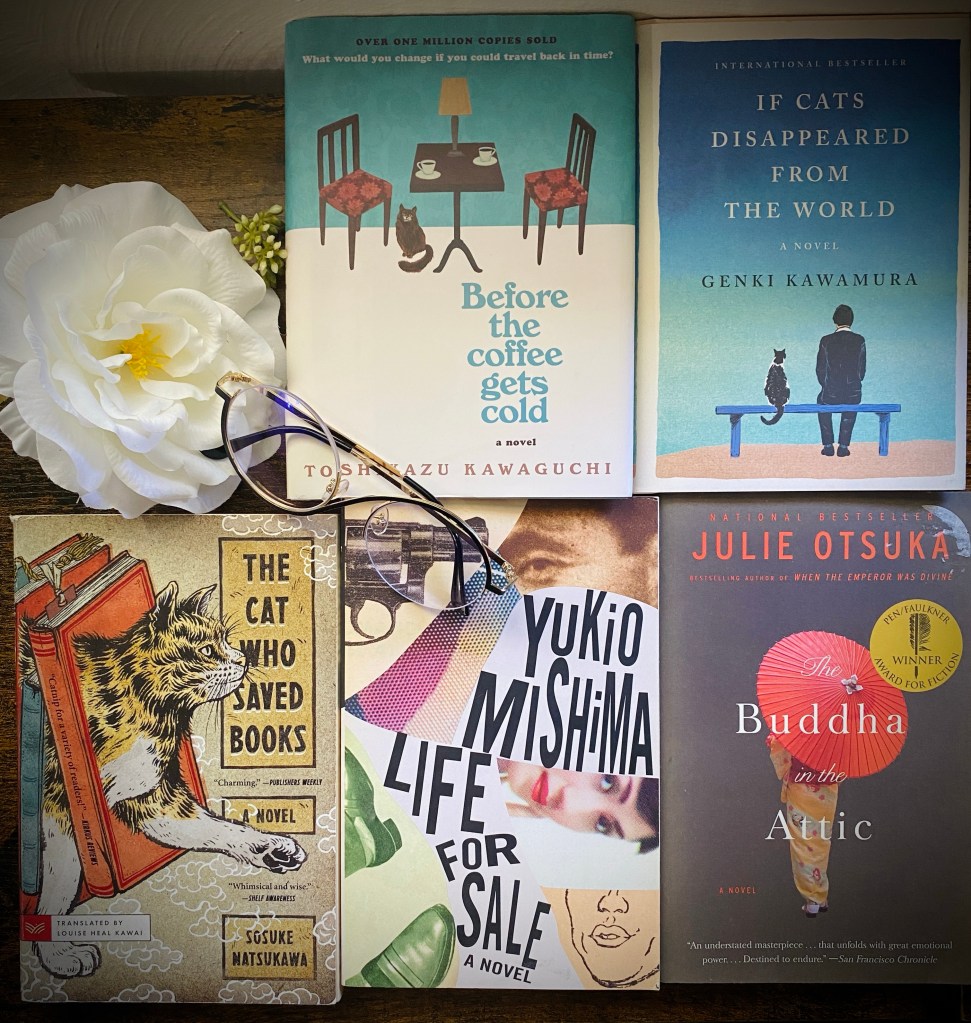
There was a major sale at my local bookstore that highlighted quite a few pieces by contemporary Japanese authors:
Before the Coffee Gets Cold by Toshikazu Kawaguchi
If Cats Disapeared from the World by Genki Kawamura
The Cat Who Saved Books by Sosuke Natsukawa
Life for Sale by Yukio Mishima
Buddha in the Attic by Julie Otsuka
Not sure what to expect, but I’m excited to see what they bring to the mind. You can tell that I have a weakness for cats on covers.
The last Japanese literary novel I read was Kazuo Ishiguro’s A Pale View of the Hills. Ishiguro is a Japanese-British author born in Nagasaki, but raised in the United Kingdom. He has a creative history of not only written work, but cinematic work and musical composition.
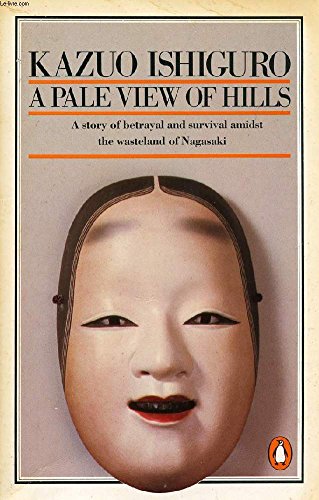
His debut novel from 1982, A Pale View of the Hills, tells the story of Etsuko, an elderly mother grappling with the suicide of her eldest daughter. As Etsuko reminisces of her younger years in post war japan, her life and unwinds as she navigates uncertainty, accountability, and autonomy in her life.
This narrative reads like strolling in the middle of a fog… in a good way. It is a mysterious read that reminds me of how it feels to be mentally and physically stagnant in a world of constrictions. Unlike the haul novels listed, Ishiguru’s novel was written in English first.
Lost in Translation
Of course, ideas and concepts are lost in translation when reading books are interpreted, however, it is still fascinating and important to read stories from (in my situation) outside of the United States. The perspectives, themes, and values presented offer new insight that my limited American experience cannot fathom.
 Galls & Walnuts