• Drafting is the Worst

    by Parker Wolfe

    ,
    A little stream of consciousness…

    I feel like I am running out of time to write sometimes. I was just marveling at the arrival of October, and now we are almost done with it! Have I made much progress on Eclipse? It often fees like I haven’t, but being kind to yourself while writing is difficult.

    Drafting is tearing me up. I tumble through hours of work at my actual job, into hours of working on my draft. At times, I feel my body falling apart from the stress of keeping my life together, the insanity of American politics, an upcoming election, climate catastrophes, and the increasing costs of living, yet in this moment of extreme uncertainty and work, I am ecstatic to have pulled my writing drive out of the pits of idleness… even when I think I’ve written slop.

    I feel like I should be depressed and anxious about every problem the news spits out at us at every second. In reality, fear breeds inaction at every level of life. I have too much to do to be worried about everything that could kill me, my friends, my family, strangers, puppies, and kittens.

    My eyesight worsened from staring at screens all day and I gained a little weight because I need one less thing to keep track of. I traded martial arts for walking, and work out two or three days a week instead of five so I can stop obsessing over what American society wants me to worry about and obsess over what I want to worry about: writing.

    Drafting has felt like the worst of my problems because it has been forcing me out of my comfortable place of inaction and perfectionism. It has been different writing even when I think the progress of the day is weak. Filling up the plot with rising action has been a struggle as I navigate the dreaded middle of my book, knowing where I roughly want to take the story, but discovery has lagged behind into a bunch of scenes I now have to rewrite.

    The silver lining in all of this is that I paid my bills, so I can rest easy as I trudge on—cramping fingers and carpal tunnel be damned—dishing out what I think (hope, really) is a relatively original story.

    Yet in the turmoil of it all, this is therapeutic. There is nothing like living in the present, turning current events into a fantasy novel to make sense of the world I live in. It provides a unique sense of hope, and is a far healthier alternative to doom scrolling.

    It can be tough pushing through. Something gets put down on paper—no matter how raw, trashy, inconsistent, incomplete, worrisome, cliche, repetitive, ridiculous, repulsive, hideous, eye-rolling, and boring.

    No draft is a masterpiece.

    If only I had known this earlier. I suppose better late than never.
  • Library Haul: Writing Books

    by Parker Wolfe

    ,

    I had a bad habit of not reading enough books about writing. There are so many online references that give good advice, but with the homogenization of the internet, it’s interesting to find more colorful resources from before algorithms and learning language models were mainstream.

    I used to scoff a bit at books about writing because the ones that I was used to reminded me of college writing courses where the acceptable style was essentially anything that could be compared to the Great American Novel or Franz Kafka.

    I spent years thinking I had to abandon my genre preferences to fit in with the cool kids writing clubs. Although I am still developing a style and working on my craft, an incredible art video (forgot the name again) taught me some important lessons, and I became inspired to read some writing books for personal growth even if I don’t necessarily follow all of the practice exercises within.

    At my library, I found two books in particular with some pretty solid advice:

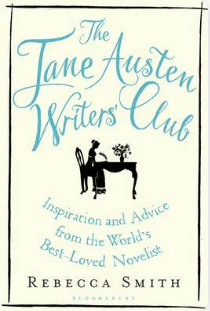
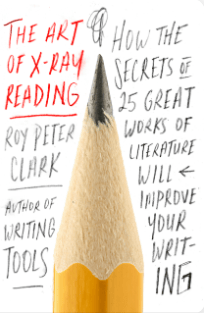
    The Jane Austen Writer’s Club by Rebecca Smith and The Art of X-Ray Reading by Roy Peter Clark.

    The Jane Austen Writers’ Club

    Rebecca Smith is a distant niece of Jane Austen, and writing does indeed run in the family. As an Austen fan, this was a wonderful book to read in that it provided several writing lessons about plot and characterization that both Smith and Austen deconstruct.

    One of my favorite takeaways from the book is the narrative technique called free indirect speech where the third-person narrator mixes their voice with the character’s perspective, thoughts, and rhythm. The characters thoughts are placed into the prose naturally, keeping the emotions, viewpoints, and even some slang typical of the character.

    The Art of X-Ray Reading

    Roy Peter Clark’s book discusses literary writing strategies that help generate meaning beyond the words of the page. In other words, he takes the works of literary masters and uses them as prime examples for writing mood, creating meaning through imagery and common objects, and organization of prose.

    This book helped to break down the organization of prose by helping me find common patterns in my own writing. I tend to overuse passive voice, too many synonyms, and similar sentence starters. This book made me more aware of these shortcomings so that I can get rid of them early in the drafting phase.

    Takeaways

    Although I’m not trying to write perfect drafts the first stime (this is impossible), these books have been valuable in helping me locate, assess, and fix common problems with my own prose. I highly suggest them.

  • Recipe: Teapot Chai

    by Parker Wolfe

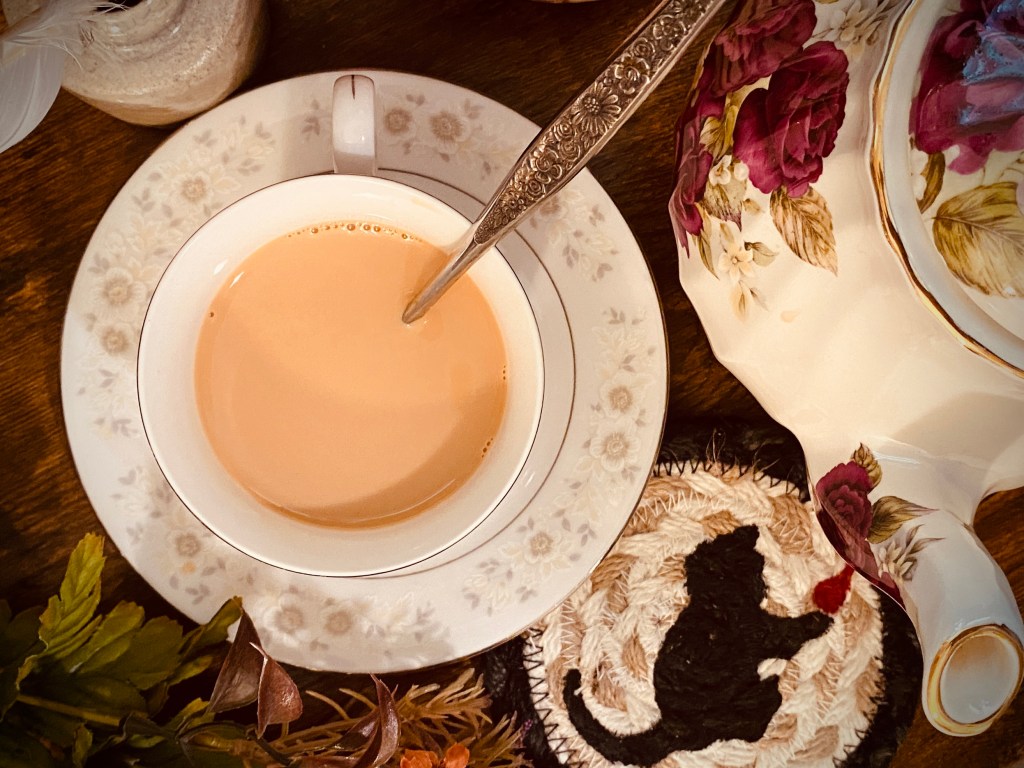
    I love to wake up on quiet weekend mornings and brew chai in my nana’s teapot. I dislike the store provided tea bags because they taste artificial—like overly spiced sugar cookies. It takes a little more patience to brew it at home, but I found a way to make a cheat version that is easy and heavenly. I normally put it into my Yeti every morning before work. On my days off, I brew double the amount in my teapot. No simmering necessary.

    I enjoy practicing ancestral veneration as I brew chai using the tools of both of my grandmothers. While one grandmother has the teapot, the other lends me her wedding china and silver utensils. I like to stir my ingredients to the left, which clears away negative energy, releases stressors, and banishes poor habits. I am reminded that I am not alone and that I have work to do and a life to enjoy.

    Ingredients

    • 415 millimeters (1.75 cups/16 oz) boiling water
    • 6 grams loose Irish Breakfast Black Tea or Assam Tea (or 3 tea bags)
    • 1 cinnamon stick
    • 8 cardamom pods (lightly crushed with a mortar and pestle)
    • 2 cloves (whole)
    • Sweetened condensed milk to taste

    Instructions

    1. In a whistling tea kettle, heat at least 700 ml (3 cups) water and bring to a boil.
    2. Place the tea leaves, cinnamon stick, crushed cardamom, and cloves into a teapot or 16 oz insulated vessel. Pour 415 ml (1.75 cups/16 oz) of the water into the teapot or vessel. Allow the chai to steep covered for 8 to 10 minutes.
    3. Add sweetened condensed milk to taste.
    4. Enjoy, being careful while sipping.
  • Strand Bookstore Haul

    by Parker Wolfe

    ,

    Recently, Hubby and I went to New York City to visit friends, family, and old school stomping grounds.

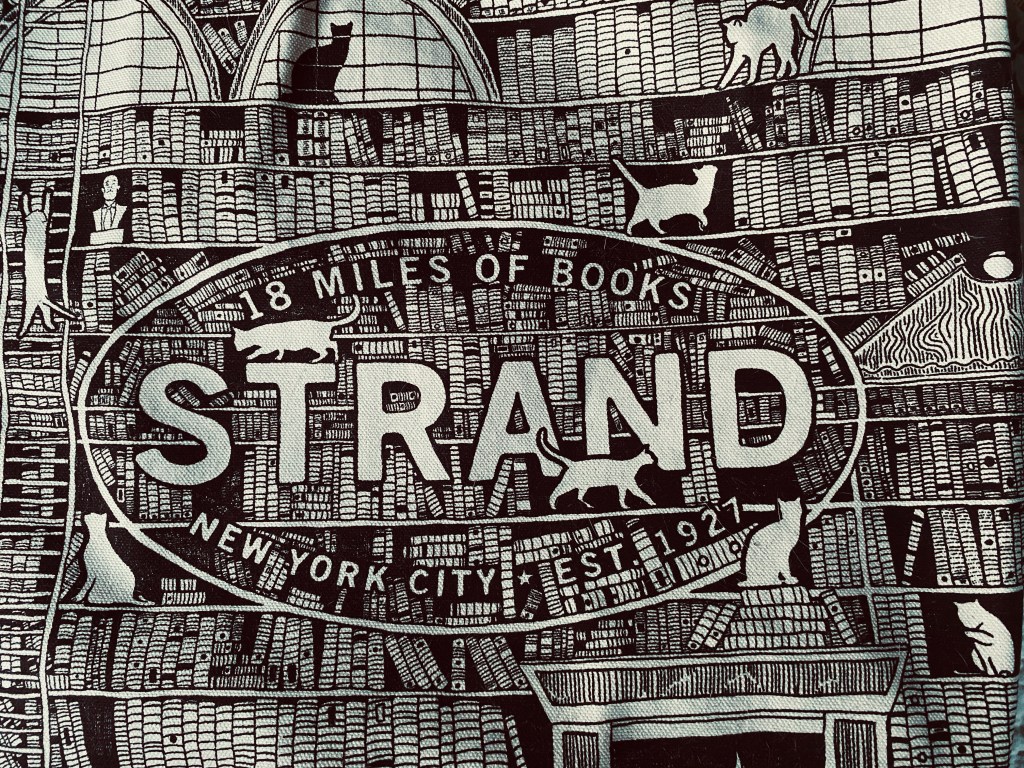
    One of them is the Strand Bookstore, a historic bookstore known for its “18 Miles Of Books” in Book Row—a six-block ribbon of used and antiquarian book shops from 1890 to the present. Strand will be a hundred years old next year, and sadly the last surviving Book Row artifact. No wonder the neighborhood and book lovers pitched in to save it when it nearly closed during COVID-19.

    I honestly don’t need to buy anymore books (the current reading pile is large), but since I had a limited amount of time to spend at the store, I figured a controlled “haul” would be acceptable as souvenirs.

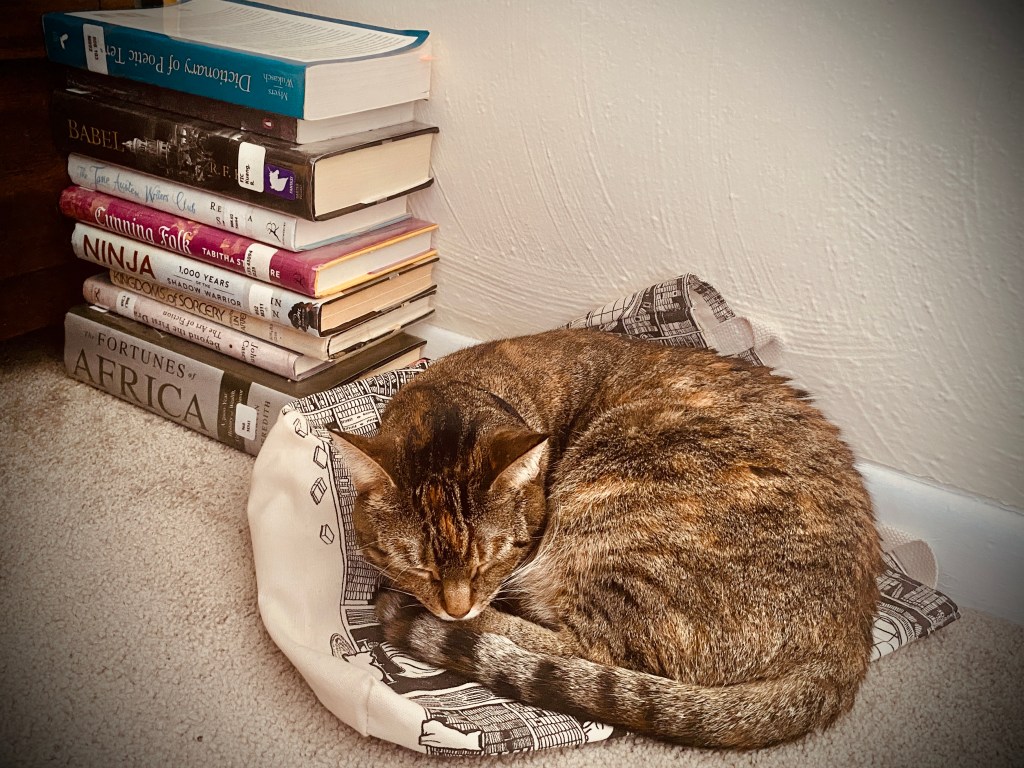
    I mainly wanted a tote—which is now my cat’s favorite unofficial bed, but after flying through the humid shelves, I decided to take a chance on three books.

    I did what I call a “Book Run,” where I had essentially fifteen minutes to find something interesting, then hurry back to Brooklyn.

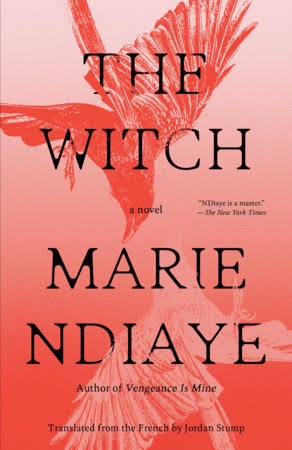
    The Witch by Marie Ndiaye

    A witch from a small French town is bound into a horrendous marriage. As she passes her knowledge down to her twin daughters, the girls must choose to either stay under the thumb of their abusive father or leave their home and mother behind.

    I love a good story about witches. This one seems interesting because it has layers of realism woven within the supernatural. Plus, I haven’t read too many stories set in the French countryside. It will be a nice change in pace.

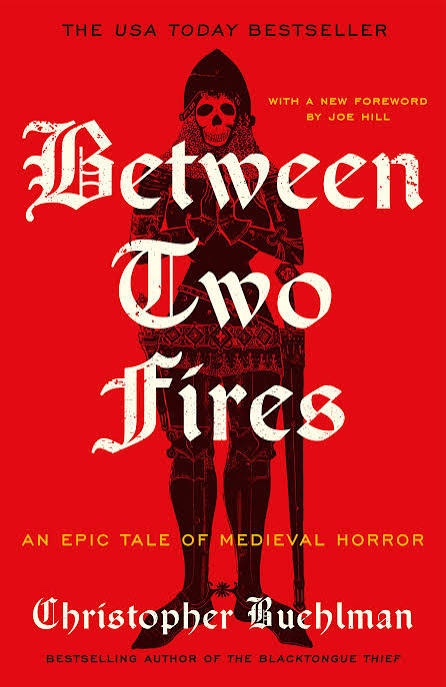
    Between Two Fires by Christopher Buehlman

    A disgraced knight named Thomas encounters a young survivor of the Black Death who warns him of the impending destruction of man as Lucifer raises an army of fallen angels.

    I enjoy books (fictional and real) about cults and plagues (I have a bit of that going on in my current novel). This one caught my eye first because of its eye-catching cover, then because of the line an epic tale of medieval horror. I love period pieces with elements of fantasy and horror. I already have a long reading list, but I am excited to get to this one.

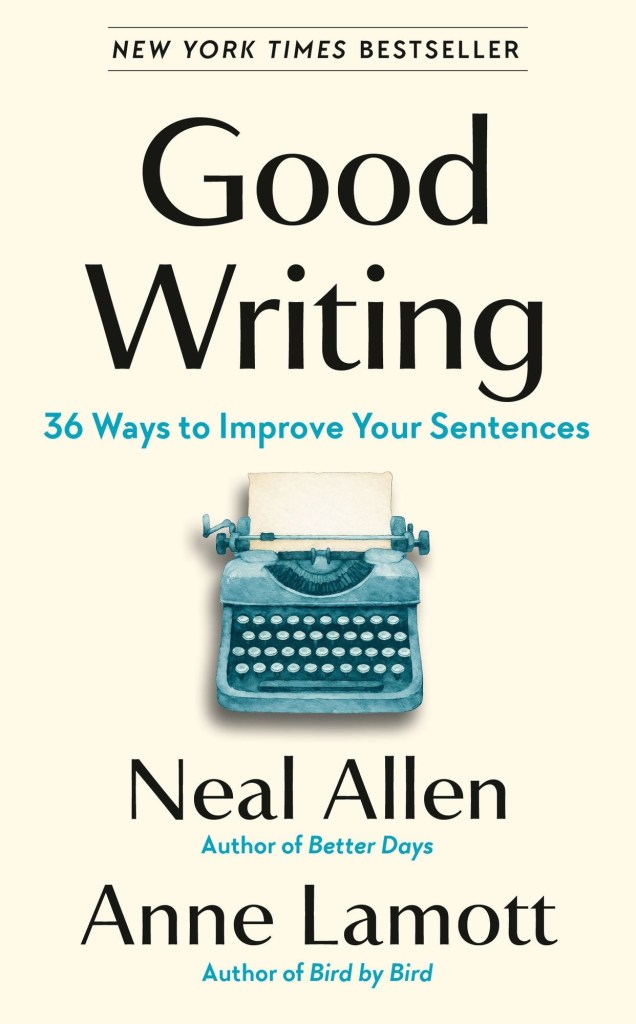
    Good Writing: 36 Ways to Improve Your Sentences by Anne Lamott and Neal Allen

    I got this one on a whim after seeing two prominent writers on the cover. I look forward to the day my draft is complete and I can go over it with a fine-toothed comb, transforming the sentences into something readable. I haven’t read too much of it yet, but I already appreciate the light-hearted banter between Allen and Lamott as they express their methods for improving sentences.
  • When Worldbuilding Takes You Down The Rabbit Hole of Astrophysics

    by Parker Wolfe

    ,

    My favorite teapot chai and a bagel with cream cheese in tow, I expected to spend my Sunday afternoon shredding through my story with some new plot developments. Only one problem: there was an extensive hole in my worldbuilding that I had not yet fully solved: the rotational axis of my world.

    Worldbuilding is the most riveting, exhausting, and chaotic process, and it is fascinating to watch my map evolve over decades. I first started the world in my tweens, and now I’m a young-ish, middle-aged adult. Clearly, I’ve put an unreasonable amount of time into this world. It might be strange to dwell on a worldbuilding hole when fantasy requires suspension of belief. With that said, realistic, physically possible elements woven between sword and sorcery help to maintain some plausibility in a fantasy world.

    For me, this is how the planet operates because the actions and workings of the world only make sense when the physics of the planet at least ring mostly true. It is important that my world, a planet called Solis (for now), has some realism baked in.

    Tidally Locked Planet

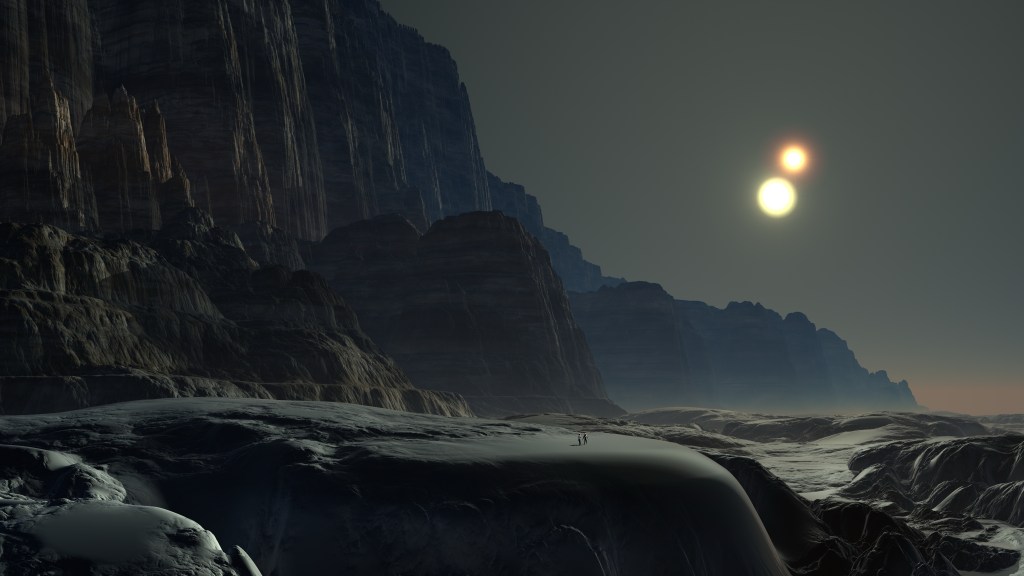
    Originally, I planned for my world to be a tidally locked planet mainly because I require the north pole to be in perpetual winter and the south pole in perpetual summer—leaving the equator and everything between 40 and -40 degrees latitude as the habitable zone of my world.

    The result of a world with such a setup would be a world with temperate, unchanging seasons, and a north pole in permanent darkness and a south pole in permanent daylight, leaving the equator in permanent twilight.

    Although this setup makes for some fun exploration, my world still requires day and night and seasonal changes—all of which would be impossible no matter how I try to make it work.

    I ended up researching everything from binary star systems to gravitational pulls to red dwarfs and red giants to planetary precessions. Was I going to have to upheave all of my plans?

    The Goldilocks Decision

    Fortunately, I did come to a solution that seems somewhat plausible. Bare with me as I try to explain my world’s new conditions with my puny knowledge of astrophysics. My world would have to have the following conditions:

    1. A Highly Eccentric Orbit
    2. Asymmetric Continents and Oceans
    3. Topographical Wind Barriers
    A Highly Eccentric Orbit

    In a typical planet, the north and south poles will swap seasons during the solstices. The planet will experience perihelion (which means closest to the star) during the southern summer, and aphelion (which means furthest from the star) during the northern summer. This creates permanent conditions for winter and a runaway ice age in the north pole, and flash-frying summers with permanent heat in the south pole.

    Asymmetric Continents and Oceans

    Since water helps to retain heat and regulate the temperature of a world, land masses experience temperature swings. I changed my world so that the south pole has a massive landmass with higher elevation and more mountains. The north pole now has an icy ocean, which will absorb some of the summer heat. There is also something called an Ice-Albedo Feedback Loop in which the glaciers reflect incoming solar radiation back into space. This prevents the snow from melting.

    Topographical Wind Barriers

    The intense heat from the south would typically travel north and melt the ice caps. Thus, a chain of high mountains would have to surround the southern polar continent to create a barrier that blocks moisture from reaching the south pole while also keeping the heat away from the rest of the planet.

    I hope I roughly got that right!

    Eventual Apsidal Precession

    Eventually, Planet Solis will wobble and its axis will rotate and the climate between the poles will reverse.

    Why This Is Important

    To be honest, I’m still not sure if any of this is possible, but it seems to be the most reasonable explanation for my worldbuilding choices.

    I am no scientist, but I like to think that I do some research to create reasonably realistic worlds. As I create Solis, I find that it is easier to build cultures and conditions when the geography of the world makes sense. For example, the people of my southern pole are mostly divided from the rest of the world due to the high mountains and deserts. They choose to remain in the desert because the other option is the treacherous, often stormy ocean that has claimed plenty of ships due to its hotter climate.

    I did the best that I could given my limitations, but when in doubt, I shouldn’t be too hard on myself because Star Wars exists. In fact, knowing that Star Wars exists relieves a bit of the anxiety and pressure off of having an entirely accurate physically possible world. I still want room for creative freedom, after all.

  • I Should Have Thrifted Tech Sooner!

    by Parker Wolfe

    My current laptop is on life support. I think I bought it over ten years ago when technology was still of moderate quality. I cut old credit cards into squares to replace keyboard and mouse keys, had the hard drive replaced twice, and the screen has blacked out, so I use an external monitor to see what I’m doing. Two hard drives are attached to it, taking up all of my USB ports. It has also outlived my Alienware, which I’ve replaced the components for over fifteen years. I can still run my video games! It is a hot mess and a technology enthusiast is probably laughing right now, but I had a conversation with a computer guy towing my car a few days ago who said that it’s unprecedented how even his components are outdated in less than two years, and they are too expensive to update and replace. It had us asking ourselves… why are we even doing this? What do we need all of this stuff for? Are the updates improvement or time consuming?

    Quite frankly, I still don’t plan on getting rid of my laptop when it still works and laptops with a terabyte of storage and 8G ram now cost a thousand dollars. I used to be adamant about replacing my own hardware until companies started soldering components to the motherboards. I’m a millennial who has lived through so many technological advances, seen computer operating systems advance from Windows 95 to Windows 11, seen vinyl records become tape cassettes to CDs to MP3 to whatever the heck we have today, television sets go from big box frames to flat screen smart TVs. The list goes on. Generations of technology were force fed to us with golden promises of “the future.” The future is here and it is mostly AI and Late Stage Capitalism slop. I’m teched-out to the point where I no longer want to be bothered. I play around with the new stuff just to not get too left behind, but am I going to use it for my simple life? Nah.

    I still need a new laptop…

    That said, I miss the portability of laptops. I decided to try my luck in the refurbished market. I wish I could go back in time and had done this sooner. I used to flinch at thrifting for refurbished technology because I feared that anything I bought would break down earlier. New technology now, however, has that problem as companies continue to jack up prices for terrible products. I already go antiquing, and have recently got into thrifting for specific needs. I normally search for furniture, fabric, books, china, and vinyl records. Why not try my luck with tech?

    Given that newer models are repulsively priced and repulsively unusable, I wanted a laptop from a previous generation that wouldn’t have all of the useless (at least for me) bells and whistles and AI that newer models have for a fraction of the memory.

    The purpose of this laptop would be for writing and research only. No games. No streaming. No tasks that require high-performance processing units or graphics cards. At most, it just needs to run Photoshop so I can keep worldbuilding my maps.

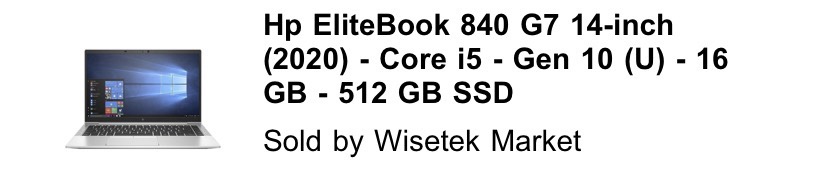
    I found this baby in like-new condition on Back Market: an HP EliteBook for $300 (almost got one for $260, but someone else bought it first). Perfect for the exclusive use of writing. I nearly bought a typewriter, but however romantic the idea sounds, typewriters aren’t exactly portable and have their own technical foibles. I wanted something I could slip into a booksleeve and reliably carry with me anywhere.

    The Laptop Verdict…

    My new laptop arrived within a few days… And, I love it. Portable. Fast. Simple. 5 STARS.

    I installed it with almost no apps, leaving me with the bulk of my memory. I threw in some cybersecurity software, organized a few files, and BOOM! Updated typewriter.

    I’m over capitalism, tariffs, inflation, and subscriptions. I’m over shittier quality that drains the pockets. I just want to sit outside and write my book in peace. I want my stuff to WORK. I may never purchase new computers or laptops ever again, especially in this economy.

  • Inspiration in No Kings

    by Parker Wolfe

    , ,
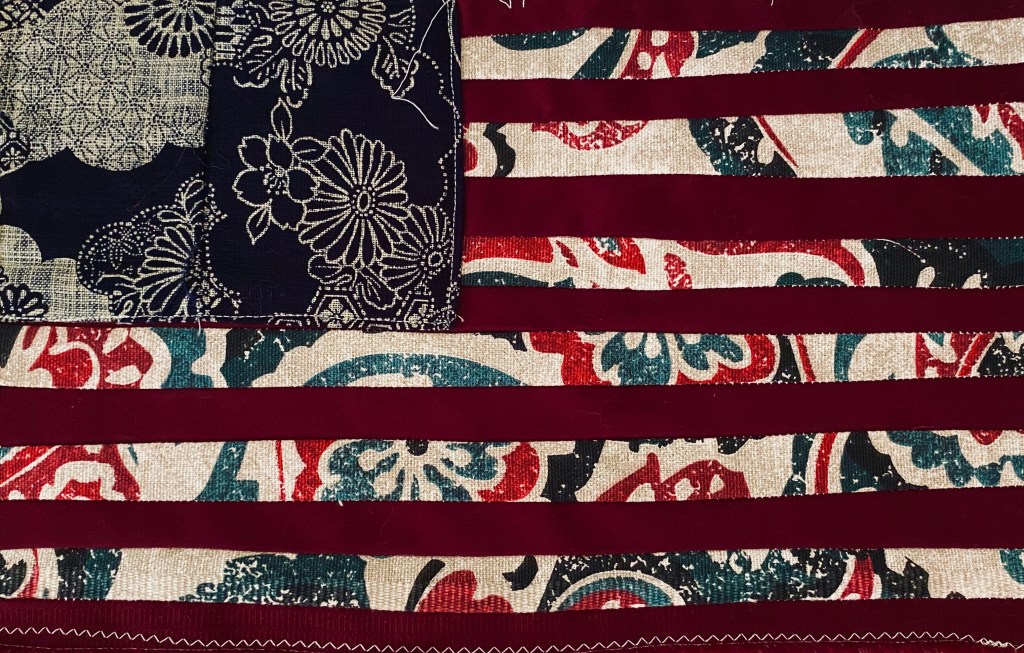
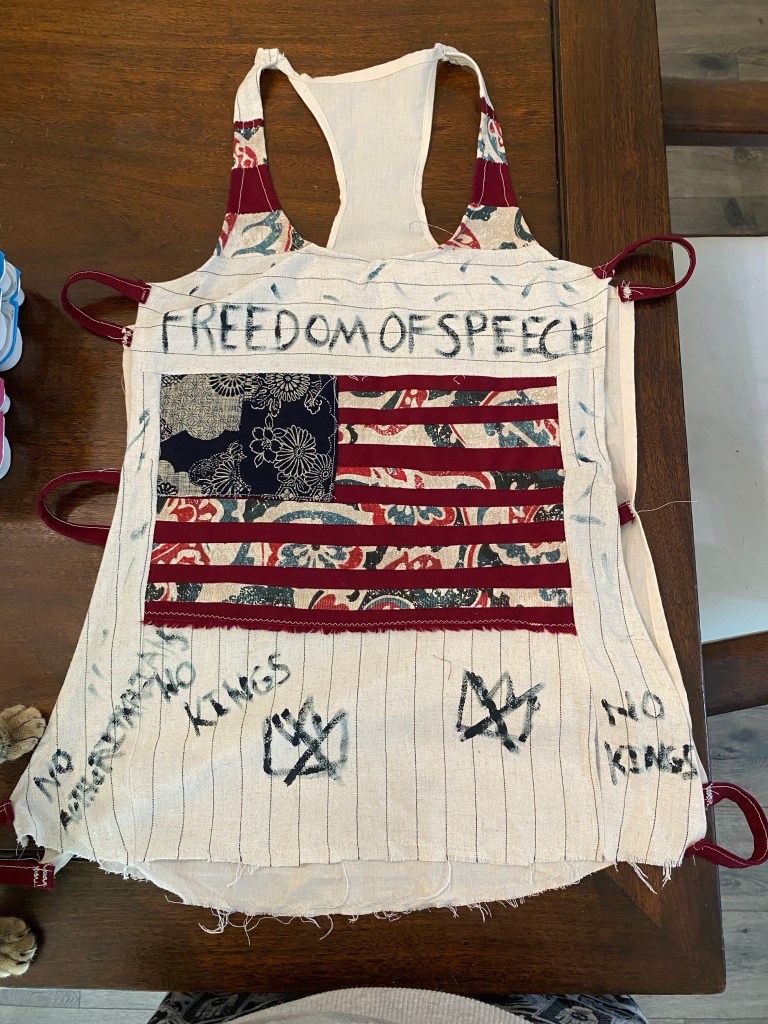
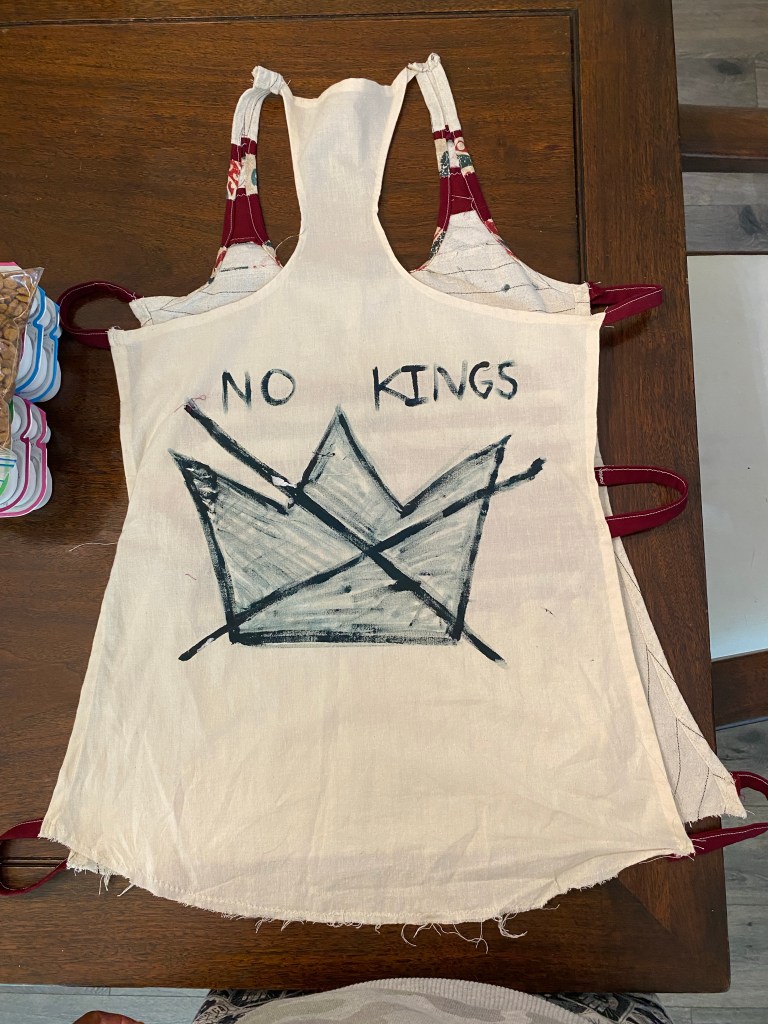
    My quilted flag with scrap materials.

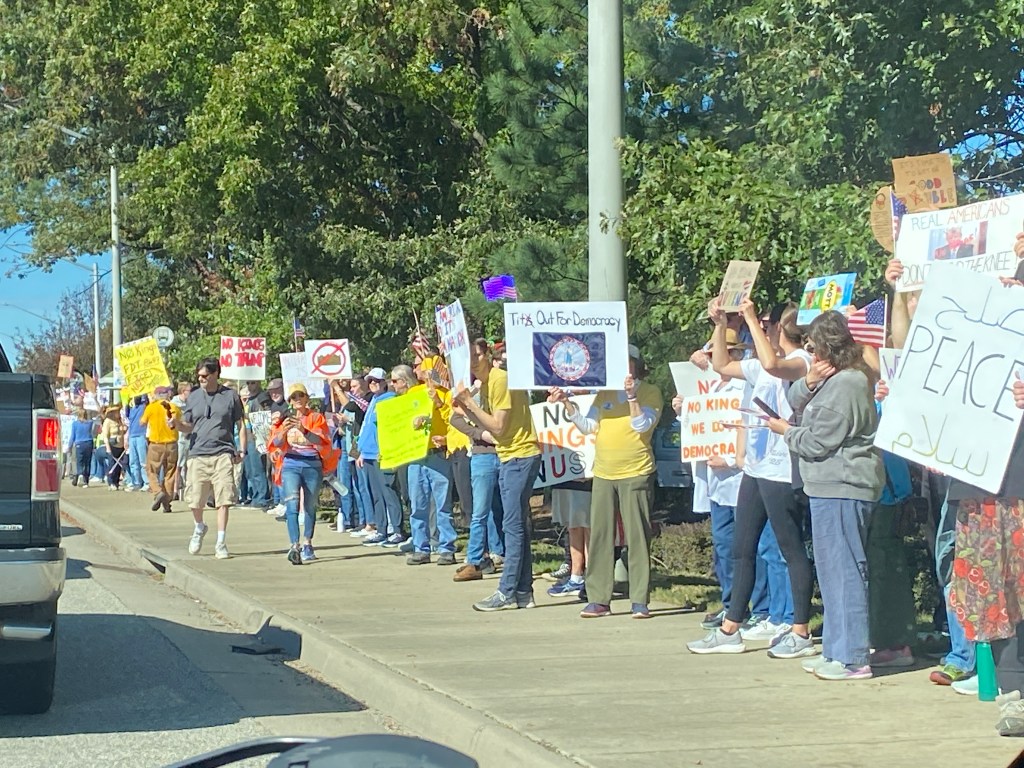
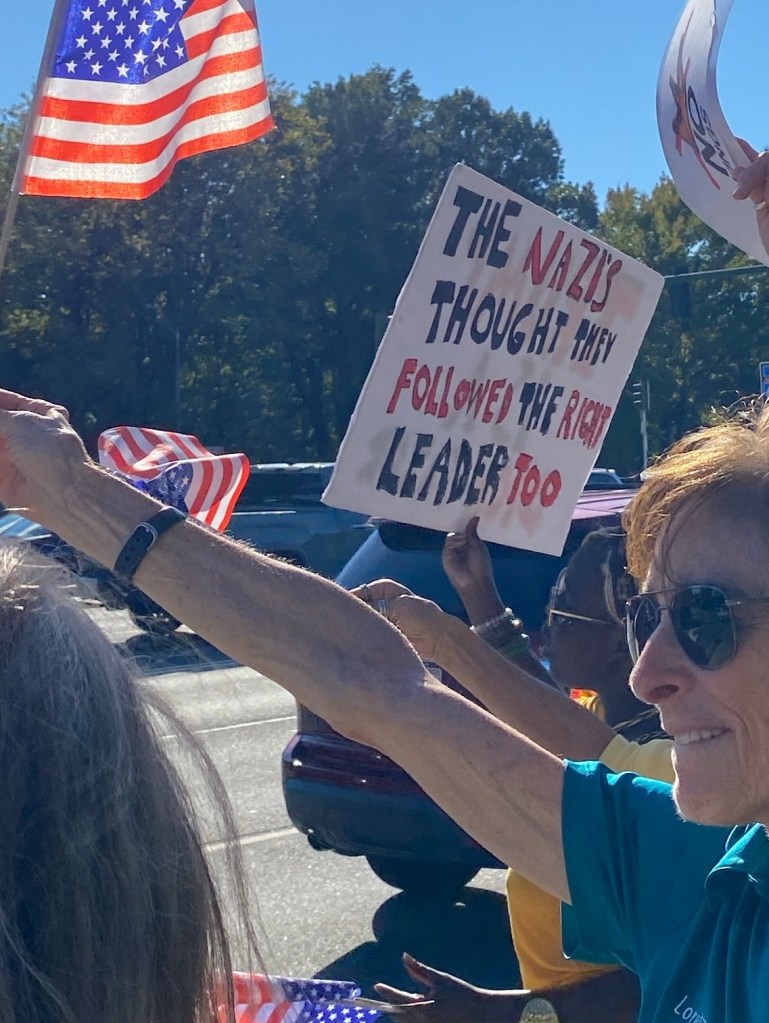
    Happy No Kings Day!

    If you live in the United States, you know the chaos and turmoil our current administration is putting the world through (war, public executions, concentration camps, lack of due process, funding for genocides, voter suppression, and eradication of intellectualism just to name a few). Things are looking quite familiar.

    It’s quite the mental exercise to keep writing and creating art during times such as these, but it is important that the arts remain one of many focal points in maintaining free expression. George Orwell, Karl Marx, Octavia Butler, and a whole host of others wrote deeply about the profound effects of authoritarian movements, erosion of public trust, and class division, and it is important that we find the parallels between their observations and today’s climate.

    Authoritarian leadership (when power is concentrated in the hands of the few) is corrosive to democracy and I find it ironic that individuals who love to spitfire the importance of free speech and freedom are perfectly fine with having their own freedoms stripped away by an old fool of a man who says “I could say the stupidest things and you’d clap,” and the crowd around him claps.

    This reality heavily inspired my decision to change the trajectory of my novel. I originally went the typical fantasy route of putting monarchs and nobility front and center. Then, I I thought, what if we stopped writing books about authoritarian emperors and kings and wrote about authoritarian politicians and unsavory businessmen? What if the evils are Artificial Intelligence, Monopolies, and Deregulation? What if the threats are about humans losing their dignity and autonomy? What if the degeneration of morality is a country where profits are favored over real human lives?

    I don’t have enough space in my book to take every little detail of our political landscape and thrust it into my story, but I do have a backlog of ideas. There’s always something that happens here and writers are often told to write what they know. Write what they see. Write what they experience. Right now, I am experiencing anger because as human beings we can do better than what we have been doing. We do not have to accept abuse, distortion, murder, and dehumanization as the norm.

    Take care today and create art. Join a cause. Be someone’s friend.

  • Authors I would love to have dinner with….

    by Parker Wolfe

    Which author would I love to have dinner with?

    This is a loaded question for an aspiring author, and the list will certainly shift like a tide depending on the moment. As of right now, four come to mind for specific reasons: I wish to hear how they transform their introspections and extrospections into poetic stories. These stories reveal the inner workings of people; their motivations and capabilities as well as their shortcomings.

    Jane Austen

    Langston Hughes

    Toni Morrison

    J.R.R. Tolkien

  • Sexy Leaves Have Arrived

    by Parker Wolfe

    ,

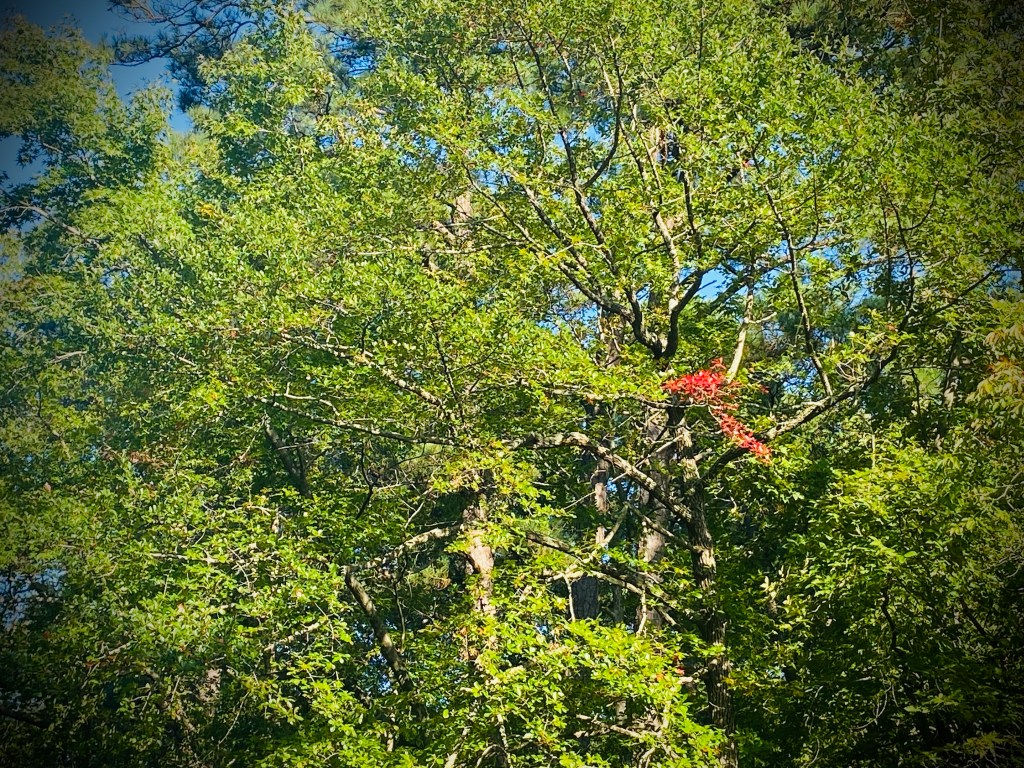
    I get tingles when I see the first scarlet leaves in the trees. It has been challenging making room for outdoor walks (work has been a whirlwind), however, I plan to get some good steps in before October ends and the trees become bald.

    I began walking and writing together some time ago. Last summer, I made it a requirement to walk often. It is meant to bring me out of the loop of algorithms and technology and reset my motivation and attention span.

    The results have been golden.

    The drive to keep writing, no matter how stuck I am, has remained, and the woods are forgiving friends when one needs a non-judgmental space to be a writing madwoman.

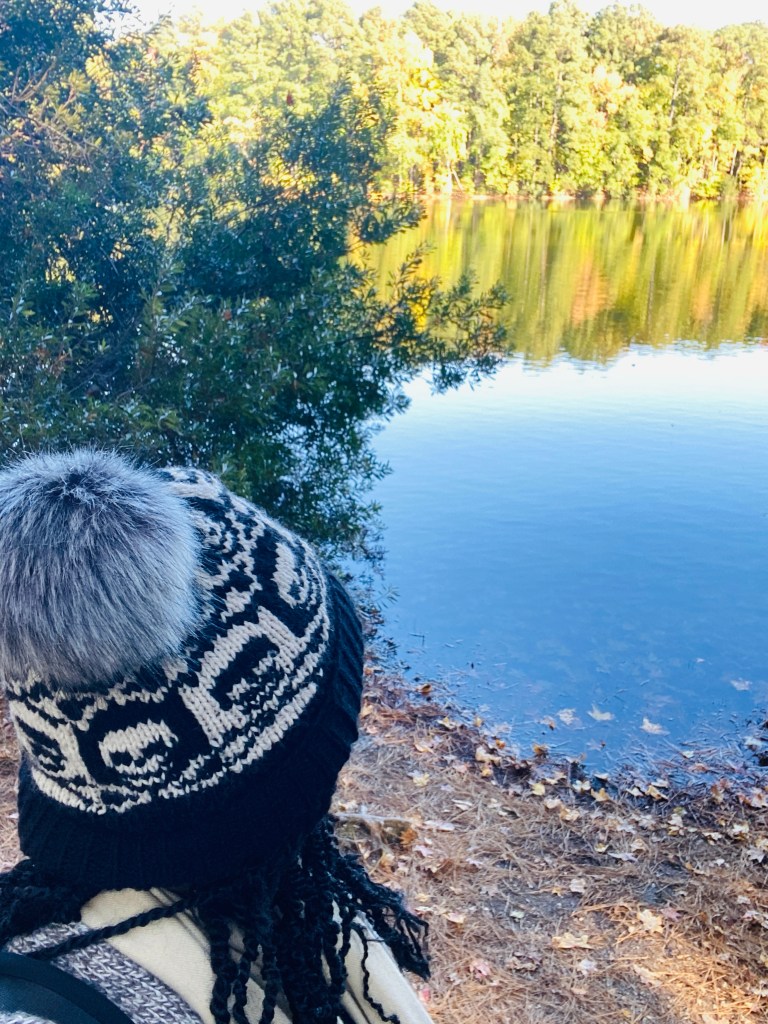
    One fall day. I am super proud of my knit beanie. The pattern is called Halloween Beanie by Noemi Zimmer from Ravelry.

    I even have a favorite spot where I can look out onto the lake. I have to go off the path of one of my favorite trails, but it isn’t too far and it is secluded enough for me to hear only the jumping fish, drifting turtles, cardinals, and mourning doves.

    I can sit (ignore the ants on my butt) and welcome the privilege that is writing by hand. It took some getting used to, but eventually I began to notice that I was choosing words carefully, thinking through my rhythms in a way that typing cannot. Typing only ripples past these rhythms.

    It helps to get out of the house and touch the grass, oaks, and lake water. The classical legends such as Charles Dickens and Virginia Woolf were walkers. Haruki Murakami is also a walker. I am itching to get out there again to see what magic nature will bring.

  • National Novel Writing Month 2026

    by Parker Wolfe

    Before I got back into writing, I was excited to take part in National Novel Writing Month… until I learned that it was shut down due to its embrace of Artificial Intelligence in writing and connections to predatory practices. Yikes!

    The spirit of the initiative is still present with writers still deciding to write within the same parameters, so I thought I would join in on the flavors and prospects of creative writing even though the original non-profit has dismantled.

    The goal of taking on this challenge is to write a 50,000 word novel each November, which translates to approximately 1,667 words per day. Preparation for the writing would begin in October, then the race to finish would commence in November.

    Even though I am working like mad on my current novel Eclipse, it is definitely not destined to be 50,000 words, and occasionally I do feel pressure and burnout as I write vigorously every day to dish out a few thousand words while AI chokes out 50,000 within minutes.

    That said, I want to be a part of this challenge so that I can overcome writer’s block and persuade myself that I will have nothing without a first draft. I am doing better worrying less about my outputs, but I still occasionally freeze and get caught in perfecting little bits of writing here and there when the meat and potatoes still need work.

    I’m leaning toward experimenting with a horror story related to dolls. While thrifting, I came across a spectacular, deliciously creepy book called The Collector’s Encyclopedia of Dolls Volume Two by Dorothy S. Coleman, and it has some of the most thrilling and chilling photographs and illustrations of dolls. I wonder how I can incorporate something from that book into a 50,000 word tale.