
With school starting soon, teachers and instructors have to return to the headquarters for rounds of professional development. One of my friends and I attended a particular training on reading testing and diagnostics where we had to learn how to navigate an application that tested and recorded the Words Per Minute that a person could read. For kicks and giggles, we both took the test. I laughed because I wasn’t exactly surprised at my score, but my friend was incredibly shocked.
While she scored at over 300 words read per minute with both fiction and non-fiction, I laughed at my measly 175 to 200 words per minute, putting me at the low end for an adult. We read books together, enjoy book clubs, and she’s been my second pair of eyes for my current novel—which I’m excited that she has been enjoying. Yet, in no way do I view this slowness of reading as a terrible problem—except for it being a challenge when trying to read more books. Is it a conspiracy that words-per-minute is a strong measure for diagnosing reading ability? I’m jesting just a little, but sometimes it’s fascinating that the same reading challenges I faced as a child sometimes pop up in adulthood.

As someone who teachers Language Arts and Literature—and hopes to someday see her own book on the shelves of libraries—it often surprises others and especially my students when I tell them I am a slow reader. I insist it, especially when talking to children and adults who struggle to read content appropriate for their age group. Reading slowly can be wrought with uncertainty and feelings of inadequacy, especially when we observe people who fly through over a hundred books annually. There is, however, a perk to being a slow reader: being able to fully digest a book in its entirety from the words to the message to the imagery and metaphorical messaging. It does not necessarily mean that one does not or cannot comprehend what is being said on paper.
As of right now, I have read twenty-one books since February of 2026. For the average American, this may be a lot. However, there are loads of people who get through this amount in a few weeks. Twenty-one books is also the most books I have ever read in the same year. I used to typically read between two and five books a year—which is probably not ideal for an aspiring author. However, as I’ve begun to quicken my pace, I learned that reading for me is a sensory experience where all of the events and dialogue (even in non-fiction) become a theatrical production in my mind. I see fully fleshed out images, and I toy with the ideas presented in the books that I read. If the imagery is lacking, my mind creates it, filling up holes where there is otherwise sandy clouds and fog—I actually imagine fog as I read if I don’t fill in the visual blanks.
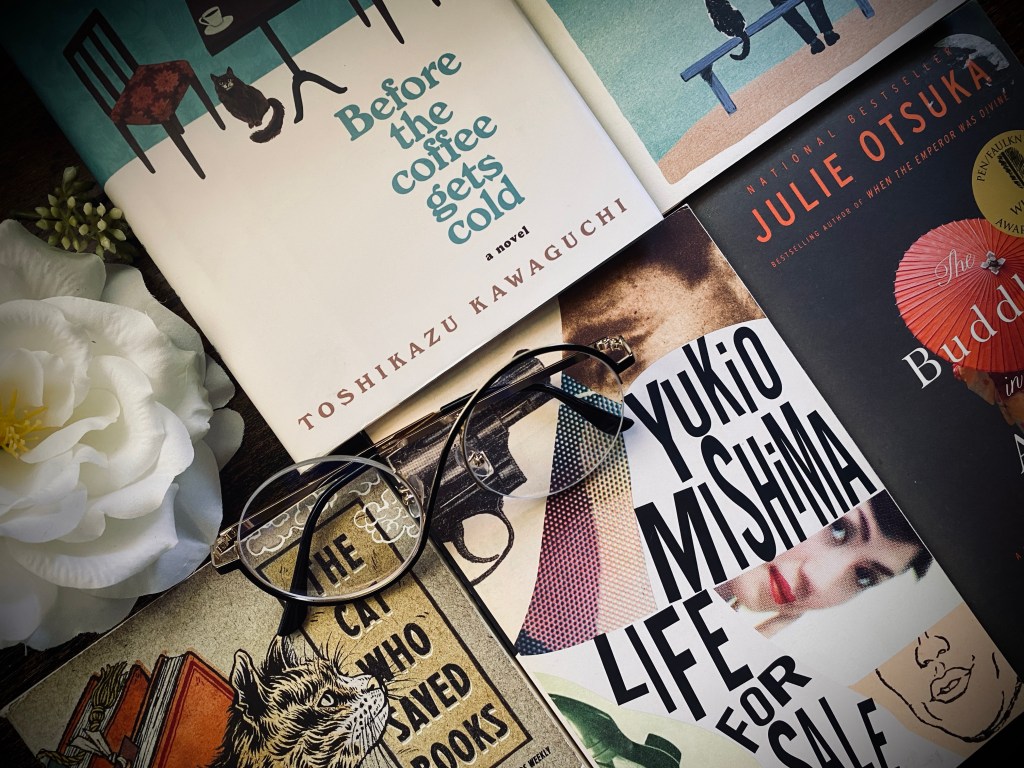
In the past, I was ashamed of how slowly I got through books, thinking that the number of books read is what counted. However, having a strong sensory experience to books is something I’ve only recently begun to appreciate. It feels like exercising the imagination. I am engulfed in the descriptions and stories, and my understanding with the words is fleshed out, like I am meeting a complete person. I have trouble skimming, my mind forgetting what I’ve skimmed, like glimpsing a forgettable portrait.
Thus, there is no need to fret about reading slowly, whether it is more stimulating to do so, or it is a natural reading pattern. So long as the book is enjoyable and thought-provoking, is there truly a disadvantage to a lack of speed?


 Galls & Walnuts